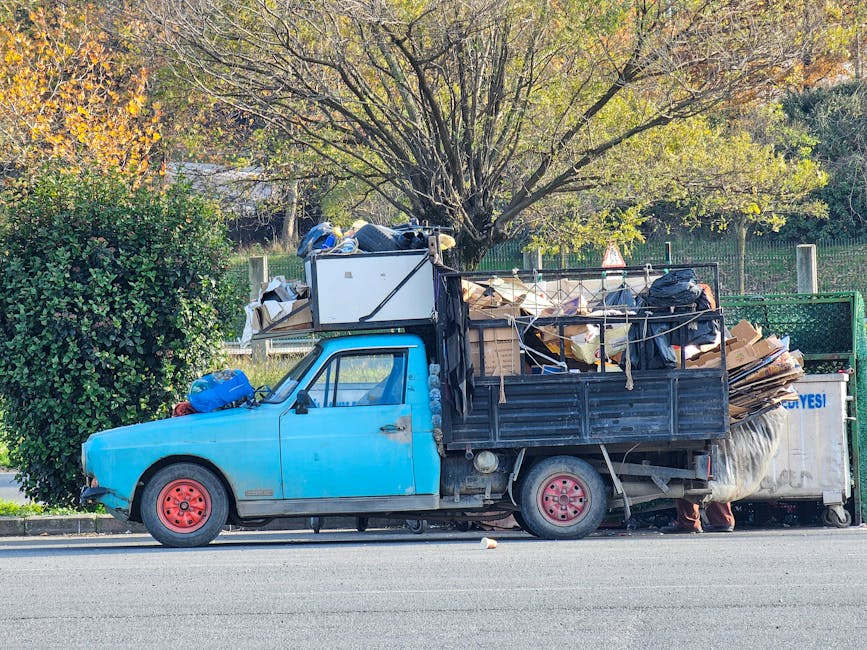
Rubbish Collection on Chalk Farm Road NW1: Local Tips
If you live, work, or manage a property near Chalk Farm Road in NW1, rubbish tends to build up faster than people expect. A missed collection, a bulky sofa left by the door, or a bin that's already full before the week is halfway through can turn into a messy little headache. This guide to Rubbish Collection on Chalk Farm Road NW1: Local Tips is here to make the whole process feel less stressful and more predictable.
We'll look at how local rubbish collection usually works, what to plan for on a busy London road, which mistakes cause delays, and how to choose the right disposal approach for flats, homes, and businesses. You'll also find a practical checklist, a realistic example, and a few grounded tips that make day-to-day waste handling easier. Nothing fancy. Just useful, local advice that helps you stay on top of things.
Table of Contents
- Why Rubbish Collection on Chalk Farm Road NW1: Local Tips Matters
- How Rubbish Collection on Chalk Farm Road NW1: Local Tips Works
- Key Benefits and Practical Advantages
- Who This Is For and When It Makes Sense
- Step-by-Step Guidance
- Expert Tips for Better Results
- Common Mistakes to Avoid
- Tools, Resources and Recommendations
- Law, Compliance, Standards, or Best Practice
- Options, Methods, or Comparison Table
- Case Study or Real-World Example
- Practical Checklist
- Conclusion
- Frequently Asked Questions
Why Rubbish Collection on Chalk Farm Road NW1: Local Tips Matters
Chalk Farm Road sits in a part of London where movement never really stops. There are flats, shops, offices, shared entrances, basement conversions, and the usual mix of narrow pavements, parked cars, and people coming and going all day. That matters because waste collection is not just about "getting rid of rubbish". It is about timing, access, storage, sorting, and avoiding disruption to neighbours and passers-by.
For households, poor rubbish handling can mean overflowing bins, unwanted smells, or items left sitting outside too long. For businesses, the stakes are even higher. One untidy loading area or a stack of waste bags placed at the wrong time can affect reputation straight away. Let's face it, people notice. On a road as visible as Chalk Farm Road, they notice quickly.
There's also a practical side. When waste is managed well, you save time, reduce stress, and avoid the awkward scramble that happens when a bulky item suddenly needs moving. You know the moment: the old wardrobe is already half dismantled, the corridor is blocked, and everyone is asking who booked the collection. Been there, in one form or another, most likely.
Good rubbish collection habits are about more than tidiness. They support cleaner shared spaces, safer walkways, and smoother routines for everyone in the building or business.
How Rubbish Collection on Chalk Farm Road NW1: Local Tips Works
At a local level, rubbish collection usually falls into a few broad routes. Some waste is handled through regular council collection arrangements, while larger or mixed loads often need a private waste removal service. The best choice depends on the type of rubbish, how much there is, and how quickly it needs to go.
In practice, the process usually looks something like this:
- You identify what needs removing: household rubbish, furniture, office waste, garden cuttings, builders' debris, or a mix.
- You separate anything that should not be mixed together, such as electronics, hazardous items, or recyclable materials.
- You decide whether the job is a bin collection issue, a bulky waste issue, or a full clearance job.
- You arrange the pickup for a time that works with access, neighbours, and any building rules.
- The waste is removed, loaded safely, and taken to the appropriate disposal or recycling route.
That sounds simple, and sometimes it is. But on a busy street, the details matter. Where will the vehicle stop? Is there space to carry items from a top-floor flat? Can the team get through a narrow hallway without scraping walls? These are the small, unglamorous questions that make a collection smooth rather than chaotic.
If you are dealing with a larger property clear-out, it may help to think in categories. For example, house clearance is usually a better fit for whole-home contents, while flat clearance suits apartments and smaller shared-access spaces. For workplace waste, office clearance or business waste removal is often more appropriate than trying to solve everything through standard bins.
Key Benefits and Practical Advantages
The main benefit of getting rubbish collection right is obvious: the rubbish disappears, and your space feels usable again. But the real value goes deeper than that.
- Less clutter: Clear floors, hallways, and shared entrances make everyday life easier.
- Better hygiene: Waste stored badly can attract odours and pests, especially in warmer weather.
- Safer access: Fewer trip hazards, blocked exits, or awkward piles in stairwells.
- Smoother neighbour relations: A tidy collection process is less likely to cause friction in shared buildings.
- More efficient clearances: When waste is sorted and ready, the job tends to move faster. Simple, but true.
- Improved recycling outcomes: Separating reusable or recyclable items reduces avoidable waste.
There is also a time-saving angle. If you have ever spent half a Saturday moving bags around because the old plan fell through, you'll know that good organisation is worth a lot. Sometimes the biggest win is just not having to think about it twice.
For some properties, the benefit is mainly operational. A business on Chalk Farm Road may need waste taken away outside opening hours, or before footfall picks up. A landlord may need a quick, discreet clearance between tenancies. A homeowner may just want the garage back. Different needs, same basic aim: get the place back under control without creating a bigger mess in the process.
Who This Is For and When It Makes Sense
This kind of rubbish collection guidance is useful for a wide range of people, but it is especially relevant if you are in one of these situations:
- Residents in flats or houses who need regular rubbish handling or a one-off bulky item removed.
- Landlords and letting agents dealing with move-outs, end-of-tenancy clear-ups, or abandoned items.
- Shop owners and office managers who need predictable waste removal with minimal disruption.
- Builders and tradespeople handling renovation debris, packaging, or light construction waste.
- Families downsizing or decluttering and wanting a structured way to clear rooms without chaos.
- Anyone with limited access, such as basement flats, upper floors, or buildings with narrow entrances.
It makes sense to think beyond simple bin day if you have more waste than the regular collection can handle. That includes big items, mixed loads, awkward furniture, or situations where waste must be removed quickly because a property is being shown, handed over, or cleaned.
A common scenario on roads like Chalk Farm Road is a small flat with no lift and a corridor full of packed bags. You can see straight away why planning matters. Carrying everything down three flights on a rainy evening is nobody's idea of fun. Not ideal, to be fair.
Step-by-Step Guidance
If you want a smoother rubbish collection process, use a simple step-by-step approach. The goal is not perfection. It is control.
1. Identify the waste properly
Start by separating the waste into sensible groups: general rubbish, recyclables, furniture, electrical items, garden waste, and builders' debris. If you mix everything together, you make disposal harder and sometimes more expensive. A little sorting upfront can save a lot later.
2. Estimate volume honestly
People often underestimate how much room a pile of waste takes up. One dismantled wardrobe, three mattress bags, and a few boxes can fill a van faster than expected. If you are unsure, take a quick photo from a few angles. That simple habit helps avoid under-booking or delays on the day.
3. Check access early
Think about parking, lift access, stairwells, time restrictions, and whether there are any building rules. On a busy NW1 road, access can be the difference between a neat collection and a frustrating one. If the vehicle cannot stop safely, everything else gets harder.
4. Prepare the items
Where possible, flatten boxes, empty drawers, bag loose waste, and keep similar items together. If furniture can be disassembled safely, that often helps too. But do not force it. A half-broken cabinet that splinters everywhere is more trouble than it's worth.
5. Protect shared areas
Use care when moving items through communal hallways or shared entrances. A bit of cardboard, a blanket, or a route cleared in advance can prevent scuffs and complaints. It sounds small. It isn't, really. These details are what keep collections civil.
6. Confirm what happens to special items
Some materials need extra care, such as fridges, TVs, mattresses, paint tins, sharp debris, or anything that might be classed as hazardous. Never assume all waste is handled the same way. Ask first, then proceed.
7. Leave a clean finish
After collection, check the area for stray screws, dust, broken packaging, or small fragments. It is amazing how often the last five minutes make the biggest difference. That's the bit people remember.
Expert Tips for Better Results
Here are the tips that tend to make the biggest real-world difference.
Book with the layout in mind. A flat on the fourth floor with no lift is not the same as a ground-floor shop. The same waste load can require a very different plan.
Keep recyclable items separate where practical. Cardboard, metals, and certain clean materials are easier to process if they are not buried under mixed rubbish. Even if the final route is handled by a service, good segregation usually helps.
Plan around peak traffic and neighbours. On Chalk Farm Road, timing matters. Mid-morning may work better than school-run times or late afternoon when the street feels tighter and more rushed.
Use short labels on mixed bags. If you have a moving day or a clearance with multiple rooms, it helps to mark bags or boxes simply: "kitchen," "bathroom," "reuse," "recycle," "general." Nothing fancy. Just enough to keep things straight.
Take photos before and after. This is especially useful for landlords, agents, and business managers. It gives you a clear record and avoids confusion later.
Do not leave collections until the last minute. That is probably the most common lesson, and the most ignored. If the waste has a deadline, build in a buffer. Roads get busy, plans change, and somebody always misplaces the keys.
Choose convenience carefully. Fast is good. But safe, legal, and tidy is better. The cheapest-looking option is not always the cheapest once delays and rework are counted.
Common Mistakes to Avoid
Most rubbish collection problems come from a few repeat mistakes. Easy to do, annoying to fix.
- Mixing everything together: It slows sorting and can create disposal issues.
- Underestimating volume: A collection booked too small often leads to an extra visit.
- Blocking access: Bags left in doorways, stairwells, or narrow hallways cause delays and safety problems.
- Forgetting awkward items: Mattresses, appliances, and broken furniture often take more planning than expected.
- Leaving waste outside too early: On a visible road, this can look untidy and attract unwanted attention.
- Not checking building rules: Some flats and commercial properties have very specific access or waste storage arrangements.
- Assuming every item can go together: That is rarely true.
One of the easiest mistakes to make is not thinking about the final exit route. People focus on the waste, which is fair enough, but forget the corridor, the lift, the pavement, or the parked car that suddenly blocks everything. Small detail, big consequence.
If there is one simple rule here, it is this: prepare the route as carefully as the rubbish itself.
Tools, Resources and Recommendations
You do not need loads of special equipment, but a few basic tools can make rubbish collection much easier and less stressful.
- Heavy-duty refuse bags for loose waste and mixed household items.
- Gloves for handling sharp, dirty, or dusty material.
- Tape and labels for grouping items or marking what should stay separate.
- Flat-pack tools or screwdrivers for safely dismantling furniture when needed.
- Cardboard or blankets to protect communal floors and doorframes.
- Phone camera for documenting waste volumes, especially before a clearance.
On the service side, it helps to understand the difference between general waste removal and specialist clearance options like furniture clearance, garage clearance, or loft clearance. Each one has a slightly different shape to it, and choosing the closest fit usually saves time.
If you are clearing outdoor or renovation waste, it may also help to look at builders waste clearance or garden clearance, depending on the job. The better the match, the smoother the process tends to be.
For financial planning and trust, it is sensible to review pricing and quotes before you book. Clear pricing helps you compare options sensibly rather than guessing. And if you are concerned about how a company works in practice, pages such as about us, insurance and safety, and recycling and sustainability can be useful for peace of mind.
Law, Compliance, Standards, or Best Practice
For rubbish collection in London, compliance matters. You do not need to be a legal expert, but you do need to stay on the right side of basic waste handling standards and property responsibilities. In everyday terms, that means using lawful disposal routes, keeping waste controlled, and avoiding unsafe or careless placement.
For households and businesses alike, the safest approach is to treat waste as something that should be stored, moved, and disposed of responsibly. If an item is damaged, sharp, contaminated, or potentially hazardous, it needs extra care. Likewise, commercial waste should be handled in line with normal business duty of care expectations. That phrase sounds grand, but the idea is simple: you remain responsible for your waste until it is properly transferred and disposed of.
Best practice usually includes:
- not leaving waste where it can block access or create hazards
- keeping recyclables separate where practical
- using appropriate containers and bags
- avoiding fly-tipping by choosing legitimate disposal routes
- checking that access and collection methods do not damage shared property
If you manage a building, it is also wise to keep an eye on health and safety around collection day. Clear pathways, sensible lifting, and communication with residents or staff all help. You can review a company's approach to this through its health and safety policy. That may sound dry, but it often tells you a lot about how carefully a team works in the real world.
For service trust and administrative details, policies such as privacy policy, terms and conditions, cookie policy, and payment and security can also help you understand how a provider operates. It is not glamorous reading, admittedly, but it does matter.
Options, Methods, or Comparison Table
Different waste problems call for different solutions. Here is a simple comparison to help you choose the right route.
| Method | Best for | Pros | Watch out for |
|---|---|---|---|
| Regular bin collection | Routine household waste and small volumes | Simple, familiar, often low effort | Not suitable for bulky items or excess waste |
| Bulky item collection | Sofas, beds, appliances, awkward large items | Convenient for one-off items | May need advance booking and access planning |
| Full waste removal | Mixed loads, decluttering, general clear-outs | Flexible and time-saving | Needs clear sorting and accurate volume estimates |
| Specialist clearance | Offices, lofts, garages, building waste, furniture | Better matched to specific jobs | Choosing the wrong type can add cost or delay |
In plain English: if you only have a couple of bags, keep it simple. If you are dealing with a room, a shop stockroom, or a van-load of mixed waste, you will probably want a more structured option. There is no prize for making it harder than it needs to be.
Case Study or Real-World Example
A typical Chalk Farm Road situation might look like this.
A small two-bedroom flat near the road has a tight hallway, no lift, and a shared entrance with several neighbours. The residents have just finished a declutter and now have an old chest of drawers, three bags of general rubbish, cardboard from a furniture delivery, and a broken office chair. Nothing dramatic. But it is enough to block the entry if left carelessly.
Instead of putting everything out at once, they sort the waste into groups. Cardboard is flattened. The chair is kept separate. Loose rubbish is bagged securely. The route from flat to entrance is cleared before collection day, and the team arrives when the street is quieter. The result is a faster pickup, less noise, fewer awkward bumps on the stairs, and no complaints from neighbours. A small win, but a real one.
That is usually how good rubbish collection works in practice. Not through clever tricks. Through sensible preparation.
It also shows why a service that understands different property types can matter. A clear-out is never just about the items. It is about the path, the timing, the people around you, and whether the job feels calm or frantic. Calm is better. Always.
Practical Checklist
Use this checklist before collection day. It keeps the job grounded and reduces avoidable problems.
- Confirm exactly what needs removing.
- Separate general rubbish, recycling, furniture, and special items.
- Estimate volume realistically.
- Check access, parking, and building rules.
- Clear hallways, staircases, and entrance routes.
- Protect floors and doorframes if needed.
- Bag loose waste securely.
- Flatten boxes and dismantle only what can be safely dismantled.
- Keep hazardous or unusual items separate until you have guidance.
- Take photos if you need a record.
- Prepare payment, booking details, and any access instructions.
- Do a final sweep after collection for small debris or forgotten items.
Quick summary: if you sort early, check access, and keep the route clear, you are already ahead of most collection-day problems. That alone saves a lot of stress.
Conclusion
Rubbish Collection on Chalk Farm Road NW1 is easier when you treat it as a planning task, not just a bin-day chore. The road's busy local rhythm, mixed property types, and tight access points mean that a little preparation goes a long way. Whether you are clearing a flat, office, garage, or family home, the same basic principles apply: sort first, check access, choose the right method, and keep things tidy.
To be fair, the best rubbish collection jobs are the ones you barely have to think about. They run quietly, safely, and without causing a scene on the pavement. That is the sweet spot. And once you have a good routine, it gets a lot easier to keep on top of it next time too.
If you are weighing up the best option for your property or business, compare the type of waste, the access conditions, and the turnaround time you need. Then make the choice that fits the job, not the other way round. That approach usually pays off.
Get a free quote today and see how much you can save.
Frequently Asked Questions
What is the best way to arrange rubbish collection on Chalk Farm Road NW1?
The best way is to match the collection method to the waste type and access conditions. Small volumes may suit regular bin collection, while bulky or mixed items often need a dedicated removal service.
Can I leave rubbish outside my property before collection?
Only if it is allowed and you are confident it will not block access or create a nuisance. On a busy road, it is usually better to keep waste inside until collection day or until it can be placed safely and tidily.
How do I know whether I need bulky waste removal or general waste removal?
If the job includes furniture, appliances, large bags, or mixed items, bulky or general waste removal is usually more suitable than standard bins. If the load is mostly one item, a simple bulky collection may be enough.
What should I do with furniture before collection?
If it is safe to do so, remove loose parts, empty drawers, and dismantle larger items into manageable pieces. If not, leave it intact and let the collection team handle it carefully.
Is it better to sort recycling before collection?
Yes, where practical. Separating cardboard, metal, and reusable items makes collections smoother and can improve recycling outcomes. It also helps you see what you are actually paying to remove.
How far in advance should I book rubbish collection?
That depends on urgency and availability, but leaving it until the last minute often causes stress. If access is tight or the waste is substantial, booking early gives you more flexibility.
What if my property has no lift or difficult access?
Tell the provider in advance and describe the access clearly. Stairs, narrow halls, and shared entrances all affect the plan, so it is better to be specific from the start.
Can businesses on Chalk Farm Road use the same waste approach as homes?
Not usually. Business waste often needs a more organised process because the volume, timing, and duty of care expectations can be different. Office and commercial settings usually benefit from a tailored removal plan.
What happens to items that cannot be mixed with general rubbish?
They are normally handled separately, depending on the item. Electricals, sharp materials, and anything potentially hazardous need special care and should never be treated as ordinary household waste.
How can I avoid delays on collection day?
Clear the route, group items sensibly, confirm access, and make sure everyone involved knows the timing. Delays are often caused by missing keys, blocked hallways, or waste that was not prepared properly.
Are there signs that I need a full clearance rather than a simple collection?
Yes. If you are dealing with multiple rooms, a packed loft, a full garage, or a property that has not been cleared for a while, a fuller clearance is usually more efficient than piecemeal removal.
Why does rubbish collection matter so much on a road like Chalk Farm Road?
Because the area is busy, visible, and often tight for space. Clean, well-planned rubbish collection keeps access easier, reduces nuisance, and helps everything feel more manageable for residents, staff, and neighbours alike.
Sometimes the smartest waste plan is also the simplest one. Clear it properly, keep it tidy, and the whole week tends to feel lighter.