Office Clearance in Camden

Office clearance in Camden needs to be practical, orderly and carefully handled, whether you are reducing surplus furniture, clearing a suite at the end of a lease, or making space for a new layout. Our service is set up to deal with typical office items in a way that keeps the process straightforward for managers, landlords and tenants. We handle collections with attention to access, timing and separation of reusable items from general office waste, so the work stays controlled from the outset.
We clear a wide range of office contents, including desks, chairs, filing units, shelving, storage, reception furniture and mixed workplace items that have accumulated over time. Where suitable, items can be sorted for reuse, recycling or disposal, depending on their condition and material. That means the job is not treated as a single sweep of everything into one stream; instead, different categories of office items are handled sensibly so the removal process remains proportionate to what is actually on site.
If you need office clearance in Camden for a single room, a whole floor or a larger commercial unit, tell us what needs removing and we can discuss the most suitable approach. A clear list of items and any site restrictions helps shape the work, and for larger projects it is often useful to note access points, lift use and loading arrangements. When you are ready, you can ask for a quotation and arrange the next step.
Clearance for desks, chairs and shared work areas
Office furniture removal is often the biggest part of a clearance, but it is rarely the only part. Desks may need to be dismantled, stackable chairs grouped, and storage pieces taken out without damaging walls, floors or fittings. We deal with the work methodically so the office can be prepared for refurbishment, reconfiguration or handover. If a workplace still has mixed items in use, those can be separated from the items already ready to leave, which helps the process remain tidy and organised.
Reception areas, meeting rooms and open-plan spaces often contain a blend of prominent furniture and smaller pieces that are easy to overlook. That can include side tables, display units, whiteboards, pedestal drawers and loose office accessories that need collecting together. A careful clearance should account for all of these items rather than only the obvious bulk furniture. Where there are multiple rooms, it helps to plan the order of removal so that access stays open and the remaining workspace is not disrupted unnecessarily.
What can be cleared from an office

Office clearance work can involve much more than old desks and broken chairs. In many premises we are asked to remove cabinets, lockable storage, meeting tables, partition pieces, screens, filing boxes, archive material and outdated reception items. We can also remove bagged office waste collected during a wider clear-out. The exact scope depends on what is on site and how it is stored, but the aim is always to take away the agreed items efficiently and leave the area ready for its next use.
Some offices contain furniture that is still usable but no longer matches the current layout, while other pieces are at the end of their life. That difference matters because it affects sorting and disposal. Items in decent condition may be suitable for reuse streams, while worn or damaged pieces may need different handling. Material type, condition and accessibility all influence the overall job, so the more varied the contents, the more useful it is to identify what should stay, what should go and what is simply being reorganised.
For planned workplace changes, a sensible clearance also makes room for IT, décor or fit-out work. Rather than removing everything at once without thought, we can work to a clear sequence that suits the property and the schedule. That is particularly helpful where business operations are continuing during the clearance and certain desks, storage areas or equipment bays must remain available for part of the day.
Managing access, loading and building rules
Many office clearances in Camden need to be fitted around shared entrances, building management requirements and limited loading space. These practical details often shape the work as much as the items themselves. If the office is in a multi-occupancy building, it may be necessary to plan around lifts, corridors, opening hours or concierge arrangements. Taking these points into account before the work begins helps reduce delays and keeps movement through the premises more controlled.
For some jobs, the best approach is a gradual removal from different rooms. For others, a more direct load-out from one central point is suitable. Either way, it is useful to keep aisles and exit routes clear while the clearance is underway. If there are fragile finishes, fitted carpet, narrow stairs or shared common areas, those features can influence how items are carried and staged. A good clearance plan respects the building as well as the furniture.
Before the work starts, a short note of what needs to be removed, any restrictions on access and whether items are on upper floors can help us quote more accurately. If you already know which pieces are staying, keeping them clearly separate from the items to be taken away is also helpful. Good preparation reduces confusion and makes the collection process more efficient, especially when the office contains mixed contents across several rooms.
Desk and furniture disposal options

Some office clearances require straightforward disposal of items that are no longer fit for use. This can include damaged desks, worn seating, broken storage or furniture that is simply no longer needed after a redesign. Where disposal is the right route, we manage the removal as a practical workplace task rather than leaving you to move bulky items through the building. The key point is that the disposal route should match the condition of the furniture and the nature of the clearance.
Not every item in an office has the same end point. One chair may be suitable for another use, another may be beyond repair; one cabinet may be empty and ready to remove, while another may still contain contents that need sorting first. That is why office clearance is usually more effective when items are reviewed before collection. A careful view of the furniture, storage and loose contents helps avoid unnecessary handling and keeps the work aligned with what the client actually wants removed.
If your office includes bulky or awkward pieces, it is worth considering the order in which they are removed. Larger items can block smaller objects or limit access to storage corners, so a planned sequence often saves time. For many customers, the aim is simple: remove the agreed items, leave the space usable and keep the process tidy. That is exactly the kind of outcome a well-managed clearance should support.
Helpful ways to prepare an enquiry
When requesting a quotation, it helps to describe the office layout in simple terms and list the main item groups that need removing. If there are filing cabinets, meeting tables, loose office supplies or archive boxes, note those separately if possible. For larger clearances, photographs can also be useful because they show the volume of items and the type of access involved. This is not about creating extra work; it is about helping the quote reflect the actual job more closely.
If the clearance needs to happen at a particular time, or if there are building rules about loading and collection, include that information in your enquiry. One short description of the site, plus any access notes, is often enough to start. Clear details at the outset make it easier to judge the scale of the work, the likely method of removal and whether the clearance is best approached room by room or in a single organised visit.
Useful office items and common clearance tasks
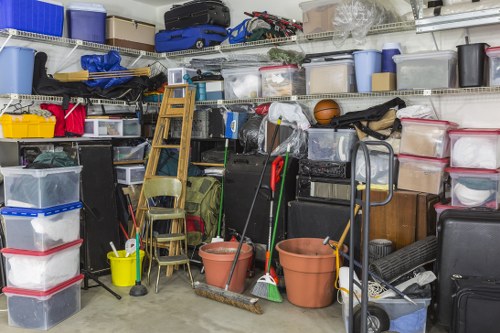
Office clearance tasks can vary from a light declutter to a substantial vacate of mixed contents. Typical work may include taking out desks, chairs, reception counters, conference tables, mobile storage, printers, archive boxes, shelving and general office waste. In some workplaces, the clearance also involves separating items for reuse or recycling before the remaining waste is removed. That combination of tasks means the work must be handled with some flexibility, especially where the office is being prepared for a change of use.
Where furniture has been assembled in situ or fitted around walls and partitions, dismantling may be needed before removal. In other offices, the challenge is simply volume: enough items have built up to make the space difficult to use efficiently. We approach both situations with the same principle, which is to remove the agreed contents in a tidy, controlled way. If there are items that should remain on site, it is best to mark them clearly or keep them grouped apart so there is no confusion during collection.
A thoughtful clearance also considers the route items take out of the building. Sharp edges, glass components and heavy storage units may require extra care when moving through communal areas or stairwells. For that reason, the type of furniture matters as much as the amount. Good organisation, sensible sequencing and careful handling help the clearance run more smoothly and reduce avoidable disruption for the people still using the premises.
About Camden
Camden is a central and north-west London district known for its dense mix of streets, transport connections and long-established cultural identity. The area takes its name from Camden Town, which grew during the nineteenth century as the Regent’s Canal, rail links and surrounding urban development transformed what had once been more open land on the edge of the expanding city. Today Camden includes a varied built environment, from Georgian and Victorian terraces to later commercial and residential blocks, with a street pattern that reflects different layers of growth. The canal remains one of its most recognisable features, running through a landscape of bridges, towpaths and waterside structures that link the district to the broader London network of routes and neighbourhoods. Camden Market and the streets around it are among the best-known parts of the area, while nearby Regent’s Park provides a large and important green space to the south-east. Camden High Street, Mornington Crescent and the station corridor add to the sense of movement and density, and the local architectural mix includes civic buildings, converted industrial premises and prominent housing estates. The borough also contains notable institutions and venues, from the British Museum at its southern edge to the cultural activity associated with music, retail and street life around Camden Town itself. Together these features give Camden a character shaped by transport, trade, housing and a long history of adaptation rather than by any single land use.
Office clearance for different workplace sizes
Not every office clearance has the same shape or volume. A small workspace may only need a few desks, chairs and storage units removed, while a larger floorplate may contain a mixture of furniture, archives and built-in fittings. The approach should reflect that difference. Smaller jobs benefit from a concise plan and a quick load-out, whereas larger clearances need clearer sequencing, more careful access planning and a closer look at what stays behind. In both cases, the aim is to match the service to the actual workplace.
Where an office is occupied during part of the day, it can be helpful to clear in stages so that business activity is not interrupted more than necessary. Some customers want the whole space cleared after hours or at a transition point; others need one area left intact while another is emptied first. We can discuss the order of removal and the layout of the rooms so the task is aligned with the building’s use. That practical planning often matters just as much as the furniture itself.
If the office includes storage rooms, archive areas or a basement, those parts can add complexity because items may be boxed, stacked or less accessible than standard furniture. An accurate description of those spaces supports a more realistic quotation. If you are still deciding what should be removed, start by separating the essential equipment from the redundant items and then ask for a quotation based on the agreed scope.
Sorting, recycling and responsible disposal
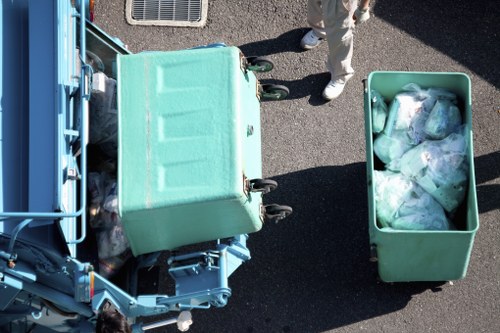
Responsibility matters in office clearance because workplaces often contain a mixture of materials and item types. Metal frames, timber furniture, plastics, paper archives and general waste may all be present in the same job. Sorting those materials properly can make the clearance more orderly and can also help direct suitable items away from the general waste stream. That process is easier when the office contents are reviewed before the job begins, especially if there are repeated furniture types or several rooms of mixed stock.
Some items will be straightforward to remove, while others may need a little more consideration. For example, a desk with separate components may be handled differently from a single-piece storage unit, and boxed files are not the same as empty shelving. By separating obvious categories, the clearance can proceed more efficiently and with less handling. It also helps to distinguish between items that are to be taken away and items that should remain in the premises for later use or collection by someone else.
If you want a sensible office clearance in Camden, the most useful next step is to gather the main item list, note any access details and decide which rooms are included. Then you can request a quotation and compare the planned scope with your timeline. Send the details when you are ready, and we can discuss a practical way to clear the office with minimal fuss.