Safe Disposal of Household Hazardous Waste in Camden
If you have half-used paint tins under the stairs, a cracked aerosol can in the shed, or an old bottle of bleach that has been sitting there for far too long, you are not alone. Safe Disposal of Household Hazardous Waste in Camden is one of those jobs most people mean to do properly, then put off until the cupboard starts looking like a small chemistry set. The tricky part is that these items cannot just be treated like ordinary rubbish. They need a careful, sensible approach that protects your home, your family, and the people handling the waste later on.
This guide explains what counts as hazardous household waste, how to sort it safely, what mistakes to avoid, and when it makes more sense to use a professional clearance or waste removal service. It is written for everyday Camden households, but the advice applies just as well if you are clearing a flat, a house, a loft, or a garage after a move, renovation, or long-overdue tidy-up.
Practical takeaway: if a household item is flammable, corrosive, toxic, pressurised, or contains chemicals, treat it with extra care and never mix it with general waste unless you are absolutely certain it is safe to do so.
For bigger clearance jobs where hazardous items are mixed in with other unwanted stuff, it can help to look at related services such as home clearance, house clearance, or even garage clearance if the problem has spread to the back of the property. And if you want to understand the company behind the service, the about us page is a sensible place to start.
Table of Contents
- Why Safe Disposal of Household Hazardous Waste in Camden Matters
- How Safe Disposal of Household Hazardous Waste in Camden Works
- Key Benefits and Practical Advantages
- Who This Is For and When It Makes Sense
- Step-by-Step Guidance
- Expert Tips for Better Results
- Common Mistakes to Avoid
- Tools, Resources and Recommendations
- Law, Compliance, Standards, or Best Practice
- Options, Methods, or Comparison Table
- Case Study or Real-World Example
- Practical Checklist
- Conclusion
- Frequently Asked Questions
Why Safe Disposal of Household Hazardous Waste in Camden Matters
Household hazardous waste is not always dramatic. It is often the quiet stuff: cleaning products, solvent-based paints, batteries, fluorescent tubes, garden chemicals, and old DIY materials. The danger comes from how ordinary these items look. A faded bottle in a kitchen cupboard can still be harmful if it leaks, reacts with other substances, or is thrown away in the wrong bin. That is why safe disposal matters so much.
In a dense urban area like Camden, there is also the practical side. Waste gets stored in flats, shared hallways, basements, sheds, and bin stores. One badly handled container can create smells, stains, fumes, or a spill that affects neighbours as well as the property owner. To be fair, nobody wants to explain why a bin bag started hissing in the communal area. It sounds like the start of a very bad day.
There is also a wider responsibility. Hazardous waste should be handled in a way that reduces risk to the people collecting it, sorting it, transporting it, and processing it later. Safe disposal is not just about being tidy. It is about preventing avoidable harm and making sure materials are directed into the right recycling or treatment route where possible.
For households doing a larger spring clean, it is common to discover hazardous items while clearing packed rooms or lofts. If that sounds familiar, services such as loft clearance and flat clearance can be useful when the waste is not neatly boxed and labelled. The same applies when a cluttered storage area has turned into a mixed waste problem.
How Safe Disposal of Household Hazardous Waste in Camden Works
The process is simpler than people often expect, but it does need a bit of care. Think of it as sorting, separating, and choosing the right route for the waste. You are not trying to solve everything in one go. You are just making each item safer and easier to handle.
1. Identify the item
Start by checking what the product actually is. Read the label, look for warning symbols, and note whether the item is liquid, solid, pressurised, or battery-powered. If the label has faded, inspect the container carefully and keep it upright. Sometimes the clue is in the smell or the packaging, but do not open sealed containers just to find out. That is asking for trouble.
2. Separate hazardous from non-hazardous waste
Keep hazardous items apart from normal household rubbish, food waste, textiles, cardboard, and general recycling. A single contaminated container can spoil a whole bag or box. Separate items by type where possible: chemicals with chemicals, batteries with batteries, and sharps in a secure container if you have them. Never mix products together in the hope they will cancel each other out. They usually do not. They really do not.
3. Store them safely until removal
Use a cool, dry, well-ventilated place away from heat sources and out of reach of children and pets. Keep products in their original containers if possible, with lids tightly closed. If a container is damaged, place it inside another suitable container or a sealed tray to catch leaks. This is especially useful in a busy home where items may be moved around before collection.
4. Choose a suitable disposal route
Some items may be suitable for specialist collection or recycling routes, while others need a licensed waste handler. For mixed household clearances, a general waste removal service may be able to manage the non-hazardous part while advising on the hazardous items separately. If the clearance is tied to a broader property job, looking at waste removal alongside the relevant clearance service can make the whole process less awkward.
5. Hand over items with clear information
If you are using a professional service, be upfront about what the waste contains. Clear descriptions help the team plan safe loading, correct segregation, and compliant disposal. "A few old cleaning bottles" is a start, but "two unopened paint tins, three aerosol cans, and a leaking bottle of solvent" is much better. Clear information saves time and reduces risk. Simple as that.
Key Benefits and Practical Advantages
Doing this properly gives you more than peace of mind, although that matters too. There are some very real practical benefits.
- Less risk of spills or fumes: careful handling reduces accidents inside the home and during transport.
- Better protection for family and neighbours: this is especially important in flats, terraces, and shared buildings.
- Cleaner storage spaces: once the hazardous items are gone, cupboards and outbuildings feel usable again.
- Less contamination of general waste: mixed waste is harder and often more expensive to deal with later.
- Improved recycling opportunities: some materials can be diverted correctly when they are separated in advance.
- Less stress during a larger clearance: a sorted job is usually a calmer job.
There is also a psychological benefit people do not always mention. Clearing dangerous clutter tends to make the whole property feel lighter. You notice it in a shed, then in the hallway, then somehow the kitchen feels less crowded too. Funny how that works.
If you are preparing a bigger household project, you may also find value in related services such as furniture disposal or furniture clearance when hazardous items are part of a larger decluttering job. That way, the whole property can be dealt with in a single, more organised visit.
Who This Is For and When It Makes Sense
This kind of disposal is relevant to more people than you might expect. It is not just for major renovations or specialist situations. In everyday life, hazardous waste builds up quietly.
You may need this guidance if you are:
- clearing out a cupboard full of old cleaning products
- moving out of a flat and finding leftover DIY materials
- sorting a garage after years of storage
- dealing with batteries, chargers, or small electrical items
- removing garden chemicals or pest control products
- tidying after decorating, repairs, or tenant turnover
- emptying a property after a long period of clutter accumulation
It also makes sense if you are not sure whether an item is safe to put in a regular bin. That uncertainty alone is a good enough reason to pause and check. Better to slow down for five minutes than create a problem you have to clean up for hours.
For landlords, letting agents, or anyone dealing with move-outs, hazardous waste can show up alongside general property clutter. In those cases, a combined approach using house clearance or home clearance can make the process much more manageable, particularly when time is short and the property needs to be handed over cleanly.
Step-by-Step Guidance
Here is a practical method you can follow without overcomplicating things. It is deliberately straightforward.
- Gather all suspect items in one place. Use a sturdy surface and keep the area well ventilated.
- Check labels and packaging. Look for hazard warnings, leaks, rust, swelling, or cracked containers.
- Sort items by type. Keep paints, solvents, aerosols, batteries, sharp objects, and cleaning products separate.
- Do not decant chemicals unless absolutely necessary. Original containers are usually safest.
- Seal and stabilise containers. Put lids on firmly and use trays or tubs for anything doubtful.
- Store away from heat and moisture. Avoid direct sunlight, boilers, radiators, and damp sheds.
- Decide whether you need a professional service. Mixed loads or bulky clearances are usually easier with help.
- Arrange removal or follow the appropriate local route. Make sure you know what is going, what is staying, and what needs special attention.
- Confirm nothing has been left behind. Check corners, shelves, and under sinks. Little things hide well, annoyingly well.
A useful habit is to photograph anything you are unsure about before moving it. That way, if you later need advice or a collection plan, you have a clear visual record. It sounds minor, but it can save a lot of back-and-forth.
Expert Tips for Better Results
After enough clearances, a few patterns become obvious. The best jobs are not the fastest ones. They are the ones that are calm, sorted, and honest about what is actually there.
Keep categories separate from the start
Mixing waste types in the same box is one of the quickest ways to make a simple task messy. Keep containers labelled by category, even if the label is just tape and a marker pen. It helps everyone later, including you.
Leave damaged containers alone unless you must move them
If a container is bulging, leaking, or corroded, do not shake it or test the lid. Treat it as unstable. Place it inside a secondary container if that can be done safely, then move it carefully to a safer area.
Plan hazardous items before the rest of the clearance
In a larger household job, it often helps to identify hazardous waste first, then organise the rest around it. This avoids accidental contamination of otherwise reusable items or recyclable materials.
Be honest about the volume
If you think there are only "a few bits", check again. A lot of people underestimate what is tucked away in sheds, lofts, or under sinks. What looks like two bags can become a full boot-load very quickly.
Choose a provider that treats safety seriously
If you are using a clearance company, look for clear safety procedures, insurance information, and straightforward payment terms. Pages such as health and safety policy, insurance and safety, and payment and security are useful signals that a business takes the practical side seriously, not just the sales side.
Truth be told, a professional team that asks sensible questions before turning up is usually a good sign. You want careful, not casual.
Common Mistakes to Avoid
Most problems come from a handful of repeat errors. Luckily, they are easy to avoid once you know what to watch for.
- Putting hazardous items in general waste: this can create contamination and safety issues.
- Mixing different chemicals: never pour leftovers together.
- Leaving batteries loose in a drawer or bag: they can short-circuit if terminals touch metal.
- Storing items near heat or flame: aerosols, solvents, and some cleaners do not belong near hot appliances.
- Ignoring damaged packaging: small leaks become big headaches if left too long.
- Forgetting about hidden items: old garages and lofts hide more than people expect.
- Assuming all "cleaning products" are harmless: not always, and that assumption causes trouble.
One common scenario is a rushed weekend clear-out. The bin bags are already full, someone finds a box of old paint, and suddenly everything gets shoved together "just for now". That "for now" can last months. And then the cupboard smells odd. That is usually your sign.
Tools, Resources and Recommendations
You do not need specialist equipment for every job, but a few simple items make the process safer and tidier.
- Marker pen and tape: useful for labelling categories and noting leaks or damage.
- Sturdy cardboard box or plastic tub: helps keep compatible items together.
- Disposable gloves: handy for handling dirty packaging or dusty containers.
- Spill tray or old baking tray: a simple way to contain small drips.
- Sealable bag or secondary container: useful for loose lids, batteries, or small items.
- Phone camera: helpful for recording labels or problem items before moving them.
If the broader job includes a shed, loft, or garden area, it may be worth considering services such as garden clearance or loft clearance so that the hazardous waste is not handled in isolation while the rest of the clutter remains untouched.
For businesses or mixed-use properties, business waste removal may also be relevant when household-style hazardous items overlap with small commercial waste streams. That happens more often than people think in home offices, workshops, and back rooms.
Law, Compliance, Standards, or Best Practice
When hazardous waste is involved, the safest approach is to follow the principle of duty of care: keep waste contained, identify it properly, and make sure it goes to an appropriate route. In the UK, the exact legal responsibilities can depend on the waste type, the amount, and whether the person or business producing it is considered a household or a commercial entity. So, avoid guessing.
For households, the practical standard is straightforward: do not place hazardous materials in normal domestic bins unless you know they are accepted there, and do not mix them with recyclable streams. For anyone arranging removal, use a provider that can explain how waste is handled and what happens next. If you are comparing services, the provider's terms and conditions and recycling and sustainability information can be helpful for understanding how they work in practice.
It is also sensible to keep records of what has been disposed of, especially in larger clearances. A quick note or photo log may seem unnecessary at the time, but it can be useful later if you need to show what was removed from the property. That said, do not turn a small domestic task into paperwork theatre. Just keep enough detail to stay organised.
Options, Methods, or Comparison Table
There is more than one way to deal with hazardous household waste, and the best option depends on how much you have, what it is, and how urgently it needs removing.
| Method | Best for | Pros | Limitations |
|---|---|---|---|
| Careful home sorting and storage | Small amounts of clearly labelled items | Low cost, simple, immediate control | Still requires a proper disposal route later |
| Professional mixed-waste clearance | Households with clutter plus hazardous items | Convenient, safer for larger jobs, reduces handling | Not every hazardous item may be accepted in the same load |
| Room-by-room declutter first | Properties with uncertainty or hidden items | Helps you identify what you actually have | Slower, needs a bit more effort |
| Property-wide clearance service | Moves, probate, end-of-tenancy, major tidy-ups | Efficient for large volumes, less disruption | Requires clear communication about hazard types |
If you have a very small amount of waste and it is clearly manageable, sorting it first is often enough. If the job has spilled across more than one room, or if there are heavy items mixed in with awkward waste, a broader clearance can be the calmer option. Sometimes the simplest answer is the one that saves your back.
Case Study or Real-World Example
A typical Camden scenario goes like this. A tenant moves out of a compact flat and leaves behind a mixture of old cleaning bottles, a couple of half-used paint tins, some broken light fittings, and a stack of general clutter in the utility cupboard. Nothing dramatic. Just enough to make the next person sigh quietly at 8 a.m.
The first step is to separate the obvious hazardous items from the rest. The cleaning products and paint are kept upright in a tray, while the non-hazardous clutter is boxed separately. The flat then becomes much easier to clear in stages. The hazardous items are flagged before removal, the rest of the contents are dealt with through a suitable property clearance route, and the risk of accidental spills during loading is reduced.
What made the difference was not a fancy process. It was simply sorting early, being clear about what was there, and not stuffing everything into one pile. That is the whole game, really.
For a larger property, the same approach can be used alongside flat clearance or house clearance, especially when the aim is to clear a whole space with minimal stress and minimal mess.
Practical Checklist
Use this checklist before any disposal or collection:
- Have I identified every item that could be hazardous?
- Are containers closed, stable, and in good condition?
- Have I separated chemicals, aerosols, batteries, and sharp items?
- Are the items stored away from heat, moisture, and children?
- Do I know which items need specialist handling?
- Have I avoided mixing hazardous waste with general rubbish?
- Is the wider clearance job also being handled safely?
- Have I taken photos or notes of anything uncertain?
- Have I checked the provider's safety and disposal information?
- Do I know where the waste is going next?
If you can tick most of those boxes, you are already well ahead of the average rushed clean-out. And if a couple are still unanswered, that is fine. Better to pause than to guess.
Conclusion
Safe disposal of household hazardous waste in Camden is really about control, not complexity. Once you know what to separate, how to store it, and when to ask for help, the job becomes much more manageable. A few careful steps can prevent leaks, reduce risk, protect neighbours, and stop a small cupboard problem turning into a whole-house headache.
Whether you are clearing a single shelf under the sink or sorting a full property with mixed waste, the same principle applies: identify it, separate it, store it safely, and move it through the right route. That is the kind of ordinary, sensible action that makes a real difference.
If you are dealing with hazardous items as part of a bigger clean-up, it may be worth exploring related services such as home clearance, house clearance, or waste removal so the whole job can be handled in one organised plan.
Get a free quote today and see how much you can save.
Small, careful choices add up. And once the dangerous clutter is gone, the space usually feels better straight away.
Frequently Asked Questions
What counts as household hazardous waste?
Household hazardous waste usually includes items that are flammable, corrosive, toxic, pressurised, or otherwise harmful if thrown away carelessly. Common examples include paints, solvents, aerosols, batteries, bleach, strong cleaning products, and some garden chemicals.
Can I put old paint in the normal bin?
Usually not. Old paint should be checked carefully because liquid paint, solvent-based products, and contaminated tins can all create disposal problems. If you are unsure, keep it separate and use a suitable waste route rather than guessing.
Are empty aerosol cans safe to throw away?
Not always. If a can still contains pressure or residue, it can be risky. Check the label and local guidance, and never puncture a can unless you are using the proper equipment and process for it.
What should I do with old batteries?
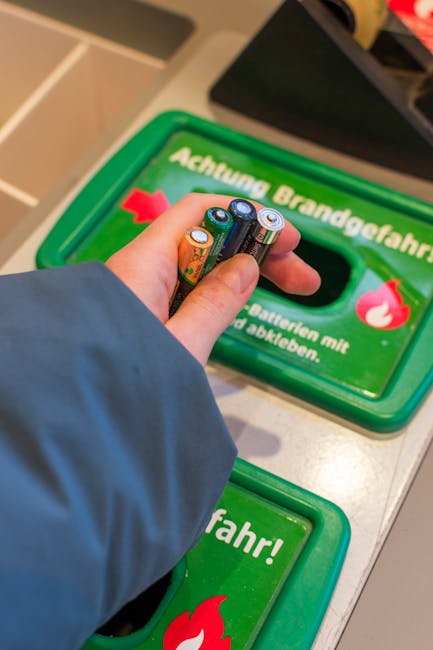
Keep batteries separate, ideally with the terminals protected so they do not touch metal objects or each other. Loose batteries in drawers or mixed bags are a common cause of trouble.
How do I know if a product is hazardous?
Look for warning symbols, caution statements, strong smells, unusual containers, or instructions that mention flammability, toxicity, or corrosive effects. If the label is missing, treat the item cautiously until you know more.
Can hazardous waste go in a general clearance load?
Sometimes small quantities can be handled separately from a wider clearance, but that depends on the item type and the service you are using. Always tell the provider exactly what is included so they can advise safely.
What is the safest way to store hazardous waste before disposal?
Keep items in their original containers where possible, lids closed, upright, and away from heat, damp, and children. A dry cupboard, utility space, or secure container is usually better than a warm shed or exposed hallway.
Do I need a professional service for a small amount of hazardous waste?
Not always. If the items are few, stable, and clearly identifiable, careful storage and the right disposal route may be enough. But if the waste is mixed, damaged, leaking, or part of a larger clear-out, professional help often makes more sense.
Why is Camden property clearance different from a simple bin day sort-out?
Camden homes often have limited storage, shared access, and tight spaces, so waste handling needs to be more organised. In flats especially, one careless item can affect neighbours or create problems in communal areas.
Is hazardous waste removal expensive?
It depends on the type and volume of waste, how accessible it is, and whether it is part of a larger clearance. The most sensible approach is to request a quote based on the actual job rather than guessing from a photo alone.
What if I find something leaking or broken?
Do not handle it roughly. Keep clear of fumes, avoid skin contact, and move other items away from the area if it is safe to do so. If the item seems unstable, the safest approach is usually to leave it contained and get advice from a qualified waste professional.
Can hazardous waste be recycled?
Some parts of it can be recovered or treated through specialist processes, but not everything is recyclable in the usual household sense. The best outcome comes from separating items properly so they can be routed to the right facility.